Essential Digital Skills for the Job Market in 2026
Discover the essential digital skills employers will demand in 2026 and how to prepare today for a resilient, future-proof career
TECHNICAL SKILLSMOST RECENT
Table of Contents:
Why Digital Skills Will Define Careers in 2026
How the Job Market Is Changing Faster Than Education
Core Digital Skills Every Professional Must Have
Advanced Digital Skills That Will Differentiate You
Human + Digital Skills: The New Competitive Advantage
How to Start Building These Skills Today (Step-by-Step)
Conclusion
The job market is no longer changing gradually; it is transforming speedily. By 2026, digital competence will not be a "nice-to-have" but a basic requirement across almost every industry. From healthcare and education to finance, marketing, and sustainability, digital skills are becoming the common language of modern work.
This shift is not driven solely by technology itself, but by how work is being redesigned. Automation, artificial intelligence, remote collaboration, data-driven decision-making, and digital platforms are reshaping roles faster than traditional education systems can adapt. As a result, individuals who continuously update their digital skill set are pulling ahead, while others risk being left behind, regardless of experience or academic qualifications.
What makes 2026 particularly critical is the convergence of trends: AI tools becoming mainstream, remote and hybrid work stabilizing as a norm, and employers prioritizing adaptability over static expertise. In this environment, the most valuable professionals are not those who know one tool well, but those who understand how digital systems work together and how to learn new tools frequently.
This guide breaks down the essential digital skills for the job market in 2026, separating foundational skills everyone must have from advanced capabilities that create real differentiation. More importantly, it will help you understand why these skills matter and how to start building them intentionally without overwhelm.
We are not preparing for a distant future. The skills of 2026 are already being hired for today.
Why Digital Skills Will Define Careers in 2026
For decades, education systems were designed around stability. Skills learned in school or university were expected to remain relevant for years, sometimes decades. That model no longer reflects reality. Today, the job market evolves faster than formal education can update curricula, certifications, or teaching methods.
One of the clearest indicators of this shift is the shrinking lifespan of skills. According to global workforce studies, many technical and digital skills now become outdated within two to three years. New tools, platforms, and workflows emerge continuously, driven by automation, artificial intelligence, and rapid digitalization across industries. By the time a formal program adapts, the market has already moved forward.
Employers are responding by changing how they evaluate talent. Degrees still matter in some fields, but they are no longer sufficient on their own. Hiring decisions increasingly focus on practical digital competence, problem-solving ability, and proof of continuous learning. This is why portfolios, real projects, micro-credentials, and hands-on experience are gaining more weight than traditional certificates.
Another major factor is the rise of hybrid roles. Job titles are no longer narrowly defined. A marketer is expected to understand analytics and automation. A project manager must navigate digital collaboration tools and data dashboards. Even non-technical roles now require daily interaction with digital systems. This blending of responsibilities means workers must develop cross-functional digital skills rather than relying on a single specialization.
Remote and distributed work has accelerated this change further. Teams are no longer limited by geography, which increases competition. Employers can choose candidates who are not only qualified but also digitally fluent, self-directed, and comfortable working with cloud-based tools and asynchronous communication. Digital skills, in this context, become a signal of reliability and professionalism.
The gap between education and employment does not mean learning is less important. It means learning must become continuous, flexible, and self-directed. Professionals who wait for formal programs to tell them what to learn often fall behind. Those who track market signals and proactively build relevant digital skills stay employable, even as roles change.
In short, the job market is no longer asking, “What did you study?”
It is asking, "What can you do now, and how fast can you adapt to the new updates?"
How the Job Market Is Changing Faster Than Education
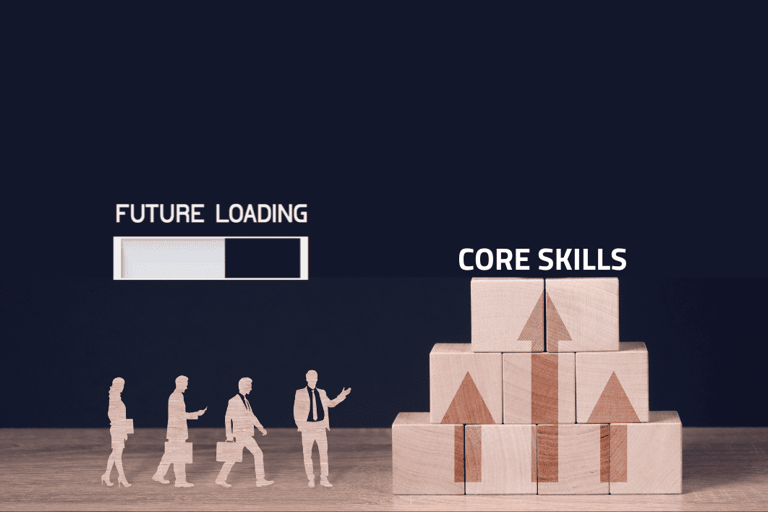

By 2026, digital skills will no longer be confined to technical roles. They will form the foundation of professional competence across industries. Regardless of job title, sector, or seniority level, certain digital capabilities will be considered baseline requirements, similar to reading, writing, and basic numeracy in earlier generations.
The following core digital skills are non-negotiable for remaining employable and effective in the modern job market.
1. Digital Literacy and Technology Awareness
Digital literacy goes far beyond knowing how to use a computer. It refers to understanding how digital systems work, how data flows between tools, and how technology shapes workflows, decisions, and outcomes.
By 2026, professionals will be expected to:
Navigate operating systems, cloud platforms, and digital environments confidently
Understand basic concepts such as cloud computing, APIs, automation, and cybersecurity risks
Evaluate new tools quickly and decide whether they add real value
This skill is critical because technology will continue to change. Those who understand how systems work can adapt easily, while those who rely on memorized steps struggle when tools evolve.
Learning resources:
Digital Literacy | Cisco Networking Academy
Digital Literacy | Microsoft
Applied Digital Skills | Google
2. Data Literacy and Basic Analytics
Data is no longer the responsibility of analysts alone. Every role now interacts with data, dashboards, metrics, reports, or performance indicators.
Core data literacy includes:
Reading and interpreting charts, tables, and dashboards
Understanding key metrics relevant to your role
Making decisions based on evidence rather than assumptions
Using tools like spreadsheets or basic analytics platforms confidently
Professionals who can ask the right questions of data and spot misleading conclusions are significantly more valuable than those who only consume reports passively.
Learning resources:
Introduction to Data Literacy | DataCamp
Improve Your Data Literacy | OpenClassrooms
3. Digital Communication and Collaboration
As remote and hybrid work become permanent structures, digital communication skills are essential for productivity and trust.
This includes:
Clear written communication across email, messaging apps, and project platforms
Professional use of collaboration tools such as shared documents, task managers, and virtual meeting systems
Understanding asynchronous communication and documentation practices
Maintaining clarity, tone, and accountability without constant supervision
In 2026, poor digital communication will be viewed as a performance issue, not a personality trait.
Learning resources:
Digital Communication and Collaboration | The Open University
Essential Online Collaboration Skills | Coursera
Develop your collaboration skills | Future Learn
4. Information Evaluation and Critical Thinking
The internet provides unlimited information, but not unlimited accuracy. Professionals must be able to evaluate sources, verify claims, and distinguish reliable data from misinformation.
This skill involves:
Assessing the credibility of digital sources
Understanding bias, algorithms, and content manipulation
Cross-checking information before acting or sharing
Applying critical thinking when using AI-generated content
As AI tools become widespread, the ability to judge output will be just as important as the ability to generate it.
Learning resources:
Critical Thinking | Oxford Home Study
Critical thinking: reasoned decision making | Coursera
5. Cybersecurity Awareness and Digital Responsibility
Cybersecurity is no longer an IT-only concern. Human error remains the leading cause of security breaches.
Every professional must understand:
Basic digital hygiene (strong passwords, two-factor authentication, secure sharing)
Common threats such as phishing, social engineering, and data leaks
Privacy responsibilities when handling data
Ethical and responsible use of digital tools and AI systems
Organizations increasingly assess digital responsibility as part of risk management, and employees play a central role.
Learning resources:
Digital Safety and Security Awareness | CISCO Networking Academy
Introduction to Cybersecurity | CISCO Networking Academy
Introduction to Cybersecurity Awareness | HP LIFE
Cybersecurity | IBM SkillsBuild
6. Learning How to Learn Digitally
Perhaps the most important core skill is the ability to continuously learn in digital environments.
This includes:
Using online courses, documentation, and communities effectively
Self-directing skill development without waiting for formal training
Experimenting with new tools and workflows
Updating skills proactively based on market trends
In a fast-changing job market, the strongest advantage is not what you know today, but how quickly you can learn tomorrow.
Learning resources:
Learning How to Learn | Coursera
These core digital skills form the minimum threshold for professional relevance in 2026. They do not make someone exceptional, but lacking them will increasingly limit opportunities.
Core Digital Skills Every Professional Must Have
By 2026, having core digital skills will be expected. What will truly set professionals apart are advanced digital capabilities, skills that allow individuals to work smarter, scale their impact, and create measurable value. These skills are not limited to technical roles; they are increasingly relevant across marketing, operations, education, health, finance, and sustainability.
While not everyone needs to master all of the following, developing strength in one or two can dramatically increase career resilience and earning potential.
1. AI Literacy and Practical AI Application
Artificial intelligence will be embedded in everyday tools, workflows, and decision-making processes. The differentiator will not be who uses AI, but who uses it well.
Advanced AI literacy includes:
Understanding what AI can and cannot do
Using AI tools to enhance productivity, research, writing, analysis, and planning
Crafting effective prompts and refining outputs
Reviewing AI-generated content critically for accuracy, bias, and relevance
Professionals who treat AI as a thinking partner will outperform those who use it as an automatic answer machine and accept its output without judgment.
2. Automation and Workflow Optimization
Automation is moving beyond large enterprises into individual workflows and small teams. Professionals who can identify repetitive tasks and automate them save time, reduce errors, and increase efficiency.
This skill involves:
Mapping workflows and identifying inefficiencies
Using no-code or low-code automation tools
Connecting tools across platforms to streamline processes
Thinking in systems rather than isolated tasks
Even simple automation knowledge can create disproportionate value inside organizations.
3. Advanced Data Interpretation and Insight Generation
Beyond basic data literacy, advanced professionals can turn data into insight and action.
This includes:
Identifying meaningful patterns and trends
Connecting data insights to business or operational decisions
Asking strategic questions based on evidence
Communicating insights clearly to non-technical stakeholders
In 2026, insight—not raw data—will be the true competitive advantage.
4. Digital Content Strategy and Online Presence
As digital visibility becomes inseparable from professional credibility, the ability to communicate expertise online will differentiate leaders from followers.
This skill includes:
Structuring content around audience needs and intent
Understanding SEO, discoverability, and platform dynamics
Building a consistent digital presence aligned with personal or organizational goals
Using content to educate, influence, and build trust
Professionals who can translate knowledge into clear, valuable content gain leverage far beyond their immediate role.
5. Tool Stack Design and Tech Decision-Making
Advanced professionals do not just use tools; they choose them wisely.
This skill involves:
Evaluating tools based on scalability, integration, and long-term value
Designing efficient tech stacks for teams or projects
Avoiding tool overload and digital clutter
Making informed decisions rather than following trends
Good tool decisions save time, money, and cognitive load, making this skill highly valued by employers.
6. Digital Ethics, Governance, and Responsible Innovation
As technology’s influence grows, organizations need professionals who understand the ethical implications of digital systems.
This includes:
Responsible use of AI and automation
Understanding data privacy and compliance principles
Balancing efficiency with human impact
Asking ethical questions in digital decision-making
By 2026, ethical awareness will increasingly be seen as a leadership skill, not a constraint.
Advanced digital skills shift a professional’s role from executor to strategic contributor. They signal maturity, foresight, and the ability to lead in uncertainty.
Advanced Digital Skills That Will Differentiate You
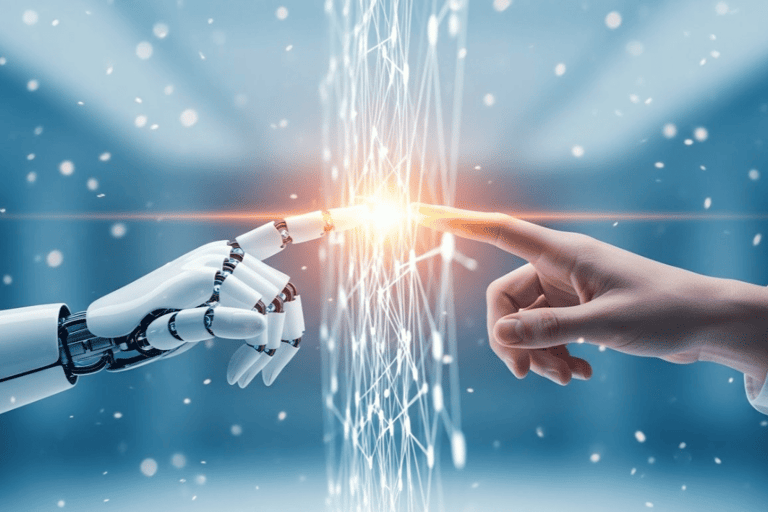

As technology advances, the question is no longer whether machines will become more capable; they already are. The real differentiator in the job market of 2026 will be how effectively humans combine digital competence with uniquely human skills. Employers are increasingly clear on this point: technical ability alone is not enough.
Digital tools can automate tasks, analyze data, and generate content at scale. What they cannot replace is judgment, context, empathy, and ethical reasoning. Professionals who integrate human skills with digital systems become adaptable, trustworthy, and capable of leading in complex environments.
1- Critical Thinking and Decision-Making
In a world saturated with data and AI-generated outputs, critical thinking becomes more valuable, not less. Professionals must be able to question results, identify flawed logic, and make informed decisions rather than blindly following recommendations.
This skill allows individuals to:
Evaluate AI and data outputs critically
Balance efficiency with accuracy and long-term impact
Make decisions under uncertainty
Take responsibility for outcomes
Technology can support decisions, but accountability remains human.
2- Communication, Clarity, and Sense-Making
As digital systems grow more complex, the ability to explain ideas clearly becomes a strategic advantage. Professionals who can translate technical information into understandable insights bridge the gap between tools and people.
This includes:
Explaining digital concepts to non-technical stakeholders
Writing and speaking with clarity and structure
Facilitating collaboration across disciplines
Reducing confusion in fast-moving environments
Clear communication turns digital capability into organizational value.
3- Adaptability and Learning Agility
2026 will be the shift from fixed expertise to continuous learning, with the most valuable professionals being those who can learn, unlearn, and relearn continuously.
Learning agility involves:
Staying curious and open to change
Updating mental models as technology evolves
Experimenting without fear of failure
Applying new tools thoughtfully rather than reactively
This mindset allows professionals to stay relevant even as roles shift.
4- Emotional Intelligence in Digital Environments
As work becomes more remote and digital, emotional intelligence becomes harder and more important.
This includes:
Reading tone and intent in written communication
Managing conflict in digital spaces
Building trust without physical presence
Leading with empathy while using technology
High emotional intelligence ensures that digital efficiency does not come at the cost of human connection.
5- Ethical Judgment and Responsibility
With greater technological power comes greater responsibility. Professionals are increasingly expected to consider the ethical implications of their digital decisions.
This involves:
Responsible use of AI and automation
Awareness of data privacy and bias
Understanding the human impact of digital systems
Speaking up when technology is misused
Ethical judgment is becoming a core leadership skill, not a compliance checkbox.
In 2026, the strongest professionals will not compete with technology. They will orchestrate it, guided by human insight, values, and responsibility.
Human + Digital Skills: The New Competitive Advantage
Preparing for the job market of 2026 does not require dramatic career shifts or expensive programs. What it does require is intentional, structured skill development. The most successful professionals build digital skills gradually, consistently, and in alignment with real market needs.
The following steps provide a practical framework you can start applying immediately.
Step 1: Audit Your Current Digital Skill Set
Begin with clarity. Before learning anything new, take a moment to understand where you stand.
Ask yourself:
Which digital tools do I use daily with confidence?
Where do I rely on others or avoid tasks due to low digital comfort?
Which skills appear repeatedly in job descriptions in my field?
This audit helps you focus on gaps that matter, rather than learning randomly.
Step 2: Prioritize One Core Skill and One Advanced Skill
Trying to learn everything at once leads to frustration and inconsistency.
Instead:
Choose one core digital skill to strengthen (e.g., data literacy or digital communication)
Choose one advanced skill that aligns with your role or future direction (e.g., AI literacy or automation)
Depth in a few areas creates far more value than shallow exposure to many.
Step 3: Learn Through Real Use, Not Passive Consumption
Digital skills develop through application, not observation.
Effective learning means:
Applying tools to real tasks, even small ones
Experimenting and refining based on results
Making mistakes and correcting them
Reflecting on what worked and what did not
Watching tutorials without practice creates familiarity, but not competence.
Step 4: Build a Visible Record of Skill Application
By 2026, proof of skills will often matter more than claims.
You can build evidence by:
Documenting projects, workflows, or experiments
Writing short reflections on what you learned
Sharing insights through content, portfolios, or internal reports
Saving examples of improved processes or outcomes
This record strengthens both confidence and credibility.
Step 5: Integrate AI as a Learning and Thinking Tool
Use AI intentionally, not to replace thinking, but to enhance it.
Practical ways include:
Asking AI to explain unfamiliar concepts
Using it to compare tools or approaches
Testing assumptions and exploring alternatives
Reviewing and refining your work
Treat AI as a mentor or collaborator, while remaining responsible for decisions.
Step 6: Schedule Skill Development Like a Professional Commitment
Skill growth rarely happens "when there is time." It occurs when time is allocated.
Even:
20–30 minutes per day
One focused session per week
can lead to significant progress over months. Consistency matters more than intensity.
Step 7: Review, Adjust, and Stay Market-Aware
The market will continue to evolve. Your learning strategy should evolve with it.
Make it a habit to:
Review your skill set every few months
Monitor emerging tools and trends
Adjust focus based on demand and relevance
Let go of skills that no longer serve your goals
This step keeps your growth aligned with reality, not assumptions.
Building digital skills is no longer a phase; it is a professional practice. Those who approach it deliberately will not only remain employable but also gain flexibility, confidence, and long-term resilience.
How to Start Building These Skills Today (Step-by-Step)
The job market of 2026 will not reward those who wait for stability. It will favor those who prepare intentionally, learn continuously, and adapt with awareness. Digital skills are no longer a separate category of expertise; they are the foundation upon which modern careers are built.
What matters most is not mastering every new tool, but developing the ability to understand digital systems, think critically, and integrate technology with human judgment. Professionals who combine digital fluency with clarity, ethics, and adaptability will remain relevant even as roles evolve and industries shift.
The future belongs to those who treat learning as an ongoing practice, not a one-time phase. By auditing your skills, choosing focused learning paths, applying knowledge in real contexts, and staying aligned with market signals, you are not just preparing for 2026; you are building long-term career resilience.
The tools already exist. The resources are widely available. The advantage comes from action.
Preparing for the future of work does not start with prediction. It starts with commitment - today.
Conclusion

Watch: In this TED talk, Jimmy McLoughlin OBE shows how we can navigate the AI revolution by leveraging human-centric strengths to turn technological change into a professional opportunity. By looking at history and personal anecdotes, he encourages the next generation to embrace AI as a tool for empowerment rather than a threat to their future careers.